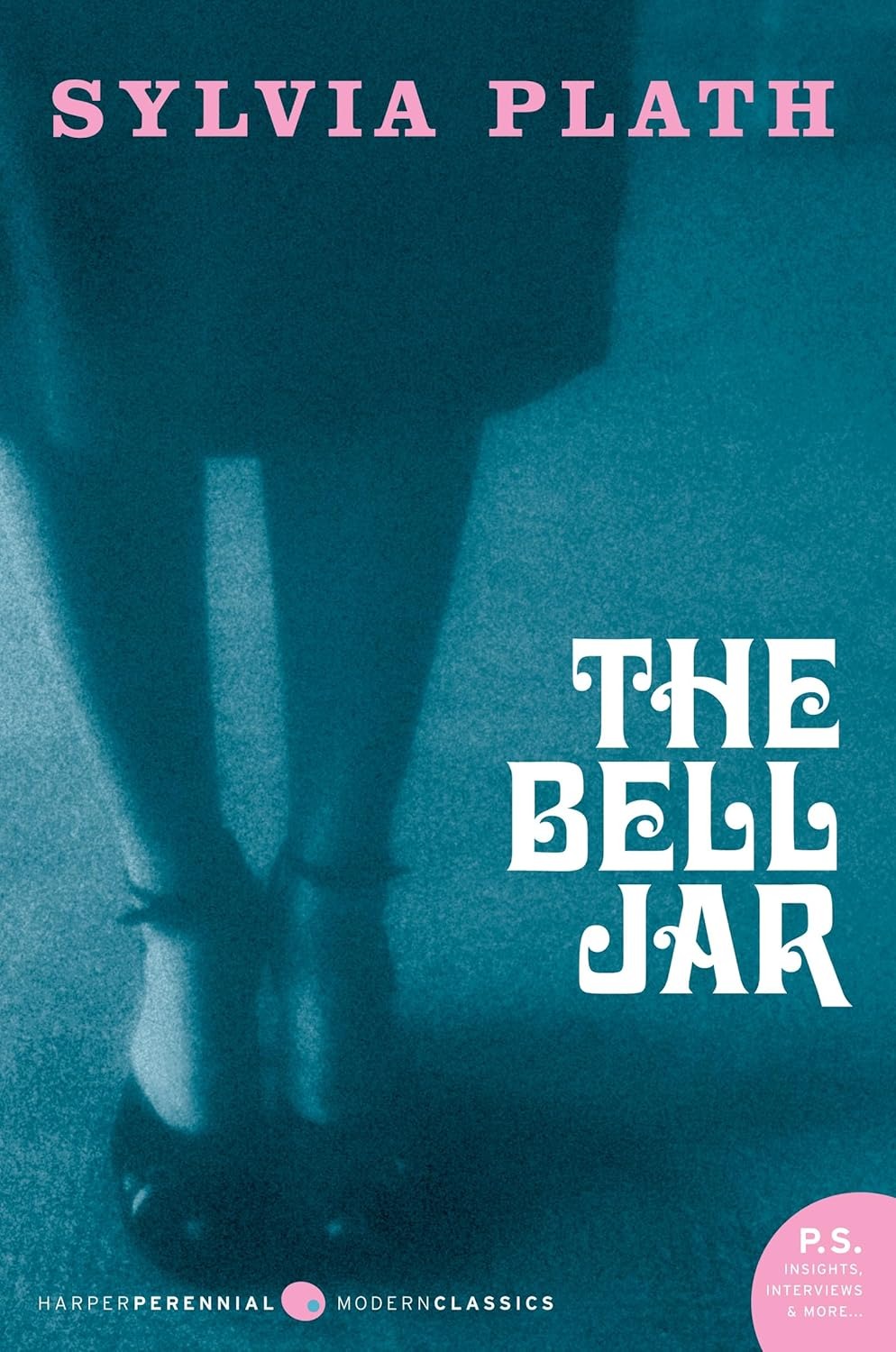
The Bell Jar book cover by Sylvia Plath

The Bell Jar

Children • Cultural Heritage
Young woman interning in NYC Struggles with mental health Disconnected from life around her Returns home to Massachusetts Failed treatments worsen her depression

Esther Greenwood—brilliant, beautiful, and enormously talented—is about to embark on what should be the most exciting season of her life: a summer spent in New York City, interning for a magazine.

But even though the life that is unfurling before her is everything she wants, she feels apart from it, unable to live in her life the way the other girls staying at the women's hotel seem able to do.

And the further apart she feels from the noise and color of life around her, especially after she returns home to Massachusetts, the more she begins to collapse in on herself, slowly slipping farther and farther beneath the waves of her despair as treatment after treatment proves ineffectual.

Choose a book format
Paperback prices by retailer

Pick a format, then compare retailer prices. The main button points to the preferred option for the selected format.

Edition information

Book details

Publisher
Harper Collins
Publication date
2014
Print length
244 pages
Language
English
ISBN
978-0060837020

Cultural Heritage

Reader guide

What to Know Before Reading The Bell Jar

Sylvia Plath’s semi-autobiographical novel follows Esther Greenwood, a brilliant and talented college student from Boston who wins a prestigious summer internship at a prominent New York City fashion magazine. Beneath the glamorous surface of lavish parties, high society, and professional opportunities, Esther finds herself increasingly alienated by the rigid societal expectations placed on women in the 1950s. As she struggles to reconcile her own ambitious intellectual desires with the conventional paths of marriage and domesticity, her sense of identity begins to fracture. The narrative chronicles her descent into a severe, paralyzing depression, beautifully capturing the claustrophobic feeling of being trapped beneath an emotional suffocating glass dome. It remains a powerful, deeply intimate, and darkly witty exploration of mental illness, identity, and the intense pressures of coming of age.

Join the Reader List

Join bks.social’s reader list for book recommendations, reader updates, featured titles, and occasional community news. No noise. Just the important things.

G-NRIS™ story intelligence

Why readers connect with The Bell Jar

A concise view of the book’s strongest literary signals and the reading interests shared by people connected to it on bks.social.

Reader connection

Readers connected to this book most often reflect Psychological Moral Explorer reader archetypes. Their strongest shared genre interests include Crime, Thriller, Literary Fiction, and Historical Fiction. They are commonly drawn to themes such as Understanding Human Nature, Self-discovery, Robot Companion, and Hope.

About the author

Sylvia Plath

Sylvia Plath

Sylvia Plath was born in 1932 in Massachusetts. Her books include the poetry collections The Colossus, Crossing the Water, Winter Trees, Ariel, and The Collected Poems, which won the Pulitzer Prize. Plath is credited with being a pioneer of the 20th-century style of writing called confessional poetry. Her poem "Daddy" is one of the best-known examples of this genre. In 1963, Plath's semi-autobiographic novel The Bell Jar was published under the pseudonym "Victoria Lucas"; it was reissued in 1966 under her own name. A complete and uncut facsimile edition of Ariel was published in 2004 with her original selection and arrangement of poems. She was married to the poet Ted Hughes, with whom she had a daughter, Frieda, and a son, Nicholas. She died in London in 1963.
A favorite quote

“It is this perfectly wrought prose and the freshness of Plath’s voice in The Bell Jar that make this book enduring in its appeal.— USA Today”

Join the book lovers community

Continue the conversation in the Book Hub for The Bell Jar

Visit bks.social’s Book Hub for reader discussions, reviews, posts, quotes, questions, reading activity, related books, and G-NRIS story intelligence.